Wednesday, April 22, 2015

Healthy Building Seminar

Healthy Homes
An introduction to and discussion around Building Biology

3 June 2015, 6pm-8pm, Qld Chapter Auditorium

We spend the majority of our lives indoors and with allergies and certain illnesses on the rise. Looking at how we design, construct and occupy our buildings can significantly affect our health. This discussion, focused on residential design, introduces the concepts of building biology to create a healthier home."

Explaining the principles of Healthy homes (toxicity, electromagnetic radiation and fields) and why they are important, this session will deliver an introduction to the concepts which embody the principles of building biology. It will provide case studies which will analyse projects, and suggest how buildings could be improved when guided by a building biologist.


Topics:

BUILDING BIOLOGY - Birgit Richards will introduce why a healthy home is so important and the overall concepts of building biology and their considerations for our homes
 

DESIGNING FOR A HEALTHY HOME - Emma Scragg will share her experiences working with a building biologist at sketch design stage of a new home for a family with multiple chemical and EMR sensitivities.

NEW FARM HEALTHY HOUSE Case Study - Lee and Lee-Anne Stevens talk about their new home in New Farm - what inspired them to build a healthy home.  They do a walkthrough of their local, built, house explaining why and how they did things differently and would do things in the future.


2 Formal CPD points  

BIRGIT RICHARDS is a building biologist with over six years of working experience in the field of sick buildings. Her own journey through chemical sensitivities and chronic fatigue has led her on a path towards helping people create healthy living and working environments. She is a member of the Australasian Society for Building Biologists (ASBB) and runs training courses for the association. Her business, Building Biology Queensland, provides services to clients for electromagnetic field testing, mould investigations, air quality testing and provision of solutions for homes and businesses.


EMMA SCRAGG is an architect with a passion for all things sustainable.  In dealing with her own health issues, consequent pregnancy and motherhood, she has a keen interest in how buildings can affect well-being.  Through working with Building Biologist Michael Meyer on a new-build project in Wavell Heights, she has gained a deeper understanding of what is involved to create a truly healthy home.
LEE AND LEE-ANNE STEVENS are experienced property developers.  After years of living healthily and organically, they decided to renovate their home using building biology principles to match their ideals and continue to enjoy their commitment to a life of well-being.

Monday, June 18, 2012

Dukkah Recipe

For those of you who came to the Dialogue and enjoyed the Dukkah Emma made, here is the recipe:


1/4c Sesame seeds
2 tbsp Coriander toasted
1 tbsp Cummin toasted
1/2c nuts/seeds - I used almonds, cashews and pepitas
1/2 tsp Salt
  1. Dry toast all the seeds in a heavy frying pan, stirring frequently until sesame seeds start popping.  
  2. Cool. 
  3. Whiz in a blender and add salt to taste (and pepper)

Monday, June 11, 2012

How to build a better block

Here is an inspiring TED Talk by Jason Roberts on improving public spaces and reinvigorating communities.  It shows how enthusiasm and creativity and a bit of rule breaking can achieve great things.
TEDxOU Jason Roberts - How to Build a Better Block
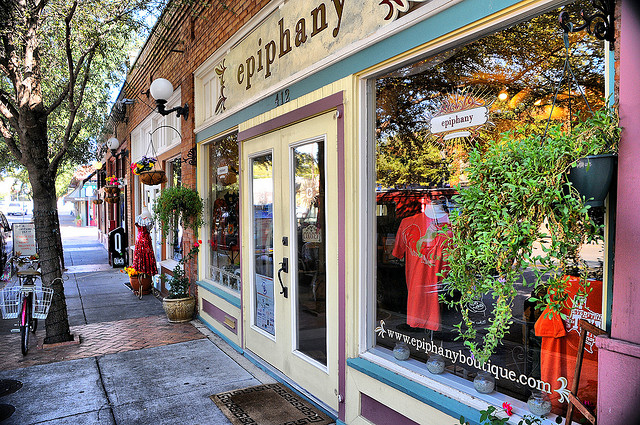
 Revitalised shop fronts and pedestrian zones
Inspiring cycling for all

Tuesday, May 29, 2012

New speakers - Athol Moore and Kylie Nixon

Taking Robyn Davies' place to discuss alternative approaches to transport are the president and committee member of Pedbiketrans, Athol Moore and Kylie Nixon.  Together, they will share updated innovations and initiatives in the approach to developing sustainable communities in order to encourage more active transport.

Athol Moore is a transport planner and engineer with over 15 years experience in multi-modal transport planning. I have a passion for active and public transport and have been active in the Pedestrian and Bicycle Transport Institute of Australasia (pedbiketrans).


Kylie is a transport engineer and planner, who has local and international experience providing advice for development/planning of urban environments.  Her work has included planning for “slow modes” and as part of the design of public transport interchange/station design – as such in her personal life she follows her own advice tending towards walk and PT as her primary mode choice of travel.  She has been an active member of Pedbiketrans for 2 years and has enjoyed the sharing of professional knowledge and experience that it facilitates.

16th June 2012 - Repeat presentation of Designing for Sustainable Communities Dialogue 1


The Sustainable Communities Dialogues is an initiative of the Institute of Architects, focused on appropriate development for Brisbane neighbourhoods and is aimed at community and residents, designers and developers. 

Riding on the success of our previous Dialogue event in 2010, our thought provoking speakers are returning to present their ideas and examples of creating sustainable communities once more.


Join us for Dialogue 1 to explore a range of themes relevant to sustainable practices and solutions for Sustainable Communities in a short, sharp, Pecha Kucha style format.

The aim is to initiate ongoing discussion on the potential changes to policy, planning and development approaches for green infrastructure and new housing typologies to contribute to the reshaping of Brisbane. Future Dialogues are being organised around topics of interest determined by the attendees.

Peter Skinner FRAIA, Associate Professor at UQ, will facilitate ten minute presentations from each of the speakers, covering examples and local sustainable initiatives, followed by a scintillating panel discussion.

Speakers will be:
·      MARCI WEBSTER MANNISON - Planning – Case study examining sustainable retrofitting an inner urban Brisbane neighbourhood.
·      ATHOL MOORE AND KYLIE NIXON - Transport – Recent examples of walkable cities and implications for Brisbane’s future.
·     CHRIS WALTON  -  Housing  - sustainable design approaches and initiatives at Currumbin Ecovillage
·      EMMA SCRAGG - Community – Examples of alternative suburban/living structures with a focus on cohousing models.
·     RUSS HOLMES -  Energy – Practical options for decentralised alternative energy solutions available in Brisbane now.
·      ARNO KING - Landscape – Creating landscapes to improve thermal comfort, create habitat and provide food.
·      ROBERT PEKIN - Food – Potential for urban food production to minimise food miles and preserve fertile soil.
·   CHRIS TANNER -  Water – Water sensitive urban design exploring sustainable solutions for treatment and storage and use.
·      STEPH ZANNAKIS - Buildings – A social enterprise approach to the construction of buildings.


Event Details:
Date:    Thursday 14th June 2012
Venue: Queensland Chapter, 70 Merivale Street, South Brisbane
Time:    5.45 pm for 6.00 pm start - refreshments provided
Registrations are essential as numbers are limited.  For more information visit www.architecture.com.au or e-mail qld@raia.com.au or telephone 07 3109 7320
5.45pm for 6pm start
Registration is essential.  Please visit www.architecture.com.au or e-mail qld@raia.com.au

Wednesday, April 7, 2010

And another way of looking at things.....

An article sent to me by a real estate friend who knew I'd be interested....

Matusik Missive – Eco waffle
24th March 2010

Most government ESD initiatives involve rebates for apparently environmentally friendly things like ceiling insulation; rain tanks; solar hot water systems and heat pumps.  Being environmentally friendly these days essentially equates to adding more to our homes, not less.  I think we have the wrong end of the stick.

In recent weeks, I have been writing about making the most of what we have – using under-utilised housing; reducing HECS debt or using superannuation in lieu of the FHOG, and maximising development around our existing infrastructure.  In short, we need to start running our cities like a business – “waste not, want not,”

“a dollar saved is two less you need to earn,” and all that. 

The same applies to environmentally sustainable housing.  Apparently, every dollar spent in Australia creates 1kg of CO².  A 25 year old tree, by way of comparison - and again, this is what I am told - absorbs the same amount of CO² every year. 

As an example and as attractive as the idea of harnessing the sun’s power might be, solar PV panels are the most expensive way – bar none – to cut greenhouse gas emissions.  It costs between $10,000 and $15,000 upfront to put a standard 1.5 kilowatt system on your roof (except perhaps if you go through a community buying scheme like Local Power - ES).  Under the new Renewable Energy Bonus scheme, announced last month by the federal government, a rebate of up to $1,000 is available for ceiling installation and solar hot water systems.  Yet spending a couple of hundred dollars with your local sparky will save you the same amount of energy as new solar panels. 

How? By installing a master kill switch at the front door, which shuts down all but the essential electrical items in the house, and also by placing an LED light in the laundry, which lights up when off-peak power is available.  Running your washing machine, clothes dryer and dishwasher at that time can save the average household up to $600 per year.  Killing the non-essential power each time you leave home can save over $400 per year.  But I suppose it is hard to show off, and keep up with the Joneses at the same time, if no one can see how environmentally friendly you are.

This same attitude needs to apply to how we build new houses.  Up to 20% of all building material that arrives on a typical residential building site is thrown away.  We need to design our houses around building products, rather than the other way around.  Less time and wastage on site would do wonders for reducing our urban footprint.......

Michael Matusik 
Brisbane real estate strategist

Monday, March 29, 2010

Slideshows

Last night's inaugural event at the Australian Institue of Architects was a great success and hopefully has started stimulating discussions and broadening sustainable ideas for future projects.  Here are some of the slideshows in pdf format:
Emma Scragg COHOUSING  

Tuesday, March 9, 2010

ENERGY - Russ Holmes - local power

Practical options for decentralised alternative energy available in Brisbane now
Russ Holmes has a background in the construction industry, however he became increasingly conscious of the environmental impact of the industry he was working within.  Visits to European countries, amongst others Germany, brought to his awareness how under utilised sustainable and renewable energy sources are in Australia compared to other countries. Germany in particular inspired his passion to make PV solar energy, a valued, more accessible source of energy in Australia.
Living in the community of West End, South Brisbane, has inspired the beginning of Local Power. Russ is a co-founder of the successful not for profit group Local Power who pioneered the community PV Solar bulk buying model in Australia. Local Power has installed 350 PV Solar systems in Brisbane homes with an additional 100 PV Solar systems about to be installed as a result of their fourth buying group.
Russ is passionate about decentralised energy production & promoting a more self-sustaining community through an ethical business framework.

Summary
Russ will talk about the shift to a decentralised model for energy production sharing overseas examples along with the example of Local Power.


Monday, March 8, 2010

WATER - Chris Tanner

Chris is a Registered Professional Engineer of Queensland with 25 years experience in the Land Development and general Civil Engineering Industry. Chris has a professional background in town planning enabling a broader grasp of the range of issues associated with land development. He has focused on integration of civil engineering solution with the environment and natural landforms and is regarded as a leader in the field of Water Sensitive Design. Chris has presented a number of papers on this subject at local and National conferences. 
Chris was a former board member of the Australian Green Development Forum.

Sunday, March 7, 2010

LANDSCAPE - Arno King

Combining the professions of urban design, landscape architecture and horticulture, Arno enjoys a collaborative approach to landscape architecture and urban design, including facilitating community workshops and working with a diversity of design professionals. 

He is interested in the development of engaging and useable environments, which enhance the qualities of place. Arno regularly provides assessments for local and state government departments and frequently gives evidence in the Planning and Environment Court. 

A prolific writer, his articles are featured in many specialist journals and popular magazines.

Saturday, March 6, 2010

FOOD - ROBERT PEKIN - Urban food production

Former dairy farmer and market gardener, Robert Pekin is founder of Brisbane-based Food Connect, Australia’s largest and most successful Community Shared Agriculture (CSA) scheme. This social business model provides dignified and secure livelihoods for small farmers and employees and develops local food resilience within communities. Robert's business replication system has seen the Food Connect model spread autonomously throughout Australia and NZ.
Robert is on the world committee of URGENCI (the global organisation for fostering local solidarity partnerships between producers and consumers). He is also a founding member of Ecological Agriculture Australia and is on many food, fibre and agriculture working groups. Robert is also on the Leadership Council of the Social Enterprise Coalition and is a mentor for the emergence of the Social Business Concept.

Robert has formed the Food Connect Foundation to oversee the formation of a Farmland Trust and a new Farmers' Development Pathway as well as support replication of the Food Connect business model.

Food Connect won the Banksia Peoples Choice Award and the QLD Gov Climate Smart Leadership Award in 2009

Friday, March 5, 2010

TRANSPORT - Design for walkability - ROBYN DAVIES

Robyn Davies is a transport planner. For the last ten years, she has specialised in sustainable transport policy and planning. She is currently the President of PedBikeTrans, a professional development and networking association for people who work on walking and cycling.

In her day job, Robyn currently works at the Transport and Main Roads department, but her comments at the AIA Dialogue should in no way be interpreted as those of the department.

Robyn recently returned from London after working for 8 months on sustainable transport projects. She came home via a 4 month international study tour including Paris, Amsterdam Berlin and New York.

TRANSPORT
Robyn will talk about the value of walkability and public space to real estate value using some recent international research and photos. She'll also talk briefly about new developments in sustainable transport for longer trips. 

Thursday, March 4, 2010

PLANNING - Marci Webster Mannison - Sustainable retrofit of an inner urban Brisbane neighbourhood

Dr Marci Webster-Mannison
Senior Lecturer, Director, Centre for Sustainable Design
BDesSt Qld., BArch Canberra, PhD Qld.

Wednesday, March 3, 2010

COMMUNITY - Cohousing - EMMA SCRAGG

Emma works with Riddel Architecture in building conservation and sustainable design projects and as a sole practitioner. She has had a passion for sustainable design and living since starting her studies at QUT, and her thesis, "Urban Ecovillages – Principles of Sustainable Design” has been a useful reference tool for many projects over the years. She has recently finished, with Riddel Architecture, a landmark sustainable home in Hill End (www.hillendeco.blogspot.com).


Emma has travelled extensively in Australia and overseas learning about sustainable buildings and communities. On last year’s cycle journey of North America from Alaska to Eugene she visited many inspiring sustainable communities, building projects and cohousing developments forms the basis of her presentation at the Sustainable Communities Dialogue and are recorded in her blog of the journey.

COMMUNITY AND COHOUSING
Community is an element of design which has not been a focus of mainstream developments over the last few decades. Houses have continued to grow in size and cost, offering more spaces dedicated to solitary activities (media rooms, parents’ retreats, studies, playrooms, ensuites). Not only does this trend reduce opportunities for interaction and sharing, our buildings have large ecological footprints.

The cohousing model has many features which encourage social interaction and richer communities whilst maintaining some level of privacy. Common facilities, gardens, ownership and the planning of cohousing developments all contribute to this.

Tuesday, March 2, 2010

HOUSING - Chris Walton - Currumbin Ecovillage

Sustainable Housing models
Chris reckons he grew up with a “nail bag” on his belt with his hard working builder/developer family.  Chris undertook tertiary business studies in Property Valuation and then worked throughout the state as a Land Inspector and Registered Property Valuer. He later was involved in a variety of private sector property roles including valuation, agency, property management and development.

14 years ago, in response to their concern about the rapid growth of poorly conceived urban developments, Chris and his wife Kerry started researching around Australia and the world to establish a model residential estate that exemplified “World’s Best Practice" in sustainable development. Their small private company, Landmatters Pty Ltd implemented The Ecovillage at Currumbin, a residential community of 144 homes, which has now won 26 local, state, federal and global awards for Industry and Government.  In Amsterdam in 2008 Chris was awarded the highest honour in world real estate, the International Real Estate Prix d’Excellence for Environmental Development.
 
Chris’s expertise in property, his efforts in sharing sustainability and his learnings through public and industry education have earned him the inaugural Queensland State Minister/Premier’s Award for Leadership in Business Sustainability and the City of the Gold Coast’s Mayor’s Award for Environmental Achievement.


Monday, March 1, 2010

BUILDING - Steph Zannakis

Social Enterprise in Construction - local West End examples of an alternative approach to construction.
Healing self/societal and human/nature relationships is central to Steph’s journey and in particular his practice of architecture. Developing an ethical practice of being in the world relative to the context of climate change, peak oil, planetary resource consumption and a meaningful lifestyle is the path Steph is seeks.

In 1993 Steph started his studies in architecture, focussing on healing and restorative dwellings which also heal the local environment. Very quickly this search evolved to include the broader perspective of culture and lifestyle alongside art and architecture. In 1996/7 and 2000/01, Stephconnected design with construction, craft, resource management, people and community through working as a carpenter.

In 2001 Steph started his own design and construct enterprise recycling building materials into architecture often constructed offsite in a workshop. Since 2004 Steph has been an active member of SPIRAL Community Hub, a community development cooperative based in West End. Designing and running construction training projects with SPIRAL, Steph works with marginalised people added another layer of understanding to the role that architecture and building has in creating community.

It is in partnership with SPIRAL, Steph is developing GreenBlack, sustainable design and construct as a social enterprise, which utilises modular construction as both a design and a construction tool, tonight’s topic of conversation.